The Halting Problem For Linear Machines
A small idea before the fireworks show

Thoralf Skolem was a mathematician who worked in mathematical logic, set theory, and number theory. He was the only known PhD student of Axel Thue, whose Thue systems were an early word-based model of computation. Skolem had only one PhD student, Öystein Ore, who did not work in logic or computation. Ore did, however, have many students including Grace Hopper and Marshall Hall, Jr., and Hall had many more including Don Knuth.
Today Ken and I try to stimulate progress on a special case of Skolem’s problem on linear sequences.
Although Ore worked mainly on ring theory and graph theory the seeds still collected around Skolem’s tree: Hall’s dissertation was titled “An Isomorphism Between Linear Recurring Sequences and Algebraic Rings.” Sequences defined by a finite linear operator are about the simplest computational process we can imagine:

The coefficients 


This is a kind of halting problem. It seems like it should be simple to analyze—it is just linear algebra—but it has remained open for over 80 years. We have discussed it several times before. This 2012 survey by Joel Ouaknine and James Worrell, plus this new one, give background on this and some related problems.
The Sum-of-Powers Case
Let 

where each 
Does there exist a natural number
so that
?
This is a special case of the Skolem problem. It arises when the coefficients 



which for 


and so on. For 

Then 



We can point up some minor progress on this problem. Our methods can handle somewhat more general cases where the sum of 


Proof
Let’s begin the proof for the case when 


Clearly we can assume that 


where

where

The upshot is that all terms are divisible by a proper factor of 



where 


Since 

Fine-Tuning and Fireworks
Ken chimes in an observation that might be distantly related: The Vandermonde determinant
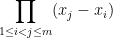
is the “smallest” alternating polynomial in 



It is also the product of the lengths of the 
To see how, let’s estimate the product of the chords in what is caricatured as the style of physicists: The length of an average chord is 

This is off by an order of magnitude in the exponent—not even close. We can be a little smarter and use the average length of a chord instead, integrating 


Such a calculation looks silly but isn’t. If we enlarge the circle by a factor of 

If we shrink the circle by 


The underlying reality is that when you take the logarithm of the product of chords, the terms of all growth orders between 


This gigantic cancellation reminds Dick and me of the present argument over the tiny observed magnitude of the cosmological constant 
This discrepancy has been called “the worst theoretical prediction in the history of physics” … the cosmological constant problem [is] the worst problem of fine-tuning in physics: there is no known natural way to derive the tiny [value] from particle physics.
“Fine-tuning” of constants without explanation is anathema to science, and many scientists have signed onto theories that there is a multiverse with 500 or more orders of magnitude of universes, enough to generate some with the tiny 
Open Problems
I believe that the general case of the Skolem can be handled, not just the simple case. But the problem of handling more than just primes seems hard. I believe that this method can be used to handle more cases than just primes. Ken and I are working on this. Meanwhile, we wish everyone Stateside a happy Fourth of July, whether or not that includes fireworks.
[added link to new survey in intro]


Thanks for these fascinating new fireworks around the Skolem Problem! By the way, a much more recent survey on the topic and closely related problems can be found at http://www.cs.ox.ac.uk/people/joel.ouaknine/publications/lrs-survey15.pdf .
that nice, thx