Why Do Some Arguments Seem Wrong?
Or: how stupid am I?
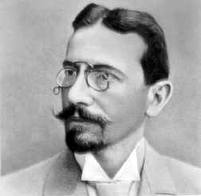
Siegbert Tarrasch was a very strong player and teacher of chess in the late 19th century and into the early 20th century. He coined the term chess blindness—the failure of a chess player to make a normally obvious move or to see a normally obvious threat. He also stated the following rule, which is named for him:
Always put the rook behind the pawn
Except when it is incorrect to do so.
Today I want to talk about a simple mathematical claim that I found to be hard to follow.
Is my trouble due to age? Or a version of chess blindness transferred to math? I am reminded of then-World Champion Vladimir Kramnik’s one-move blunder in 2006 against the chess program Deep Fritz 10 running on an ordinary quad-core PC.

Kramnik played 34…Qe3??? just as Ken was leaving to teach his intro graduate theory class, and when he arrived he put the match broadcast on the classroom Internet console just to be sure that this and 35.Qh7 checkmate had really happened. This still stands as the last time a human player has faced a computer in a match on even terms.
I have been working in the theory salt-mines for many decades now—too long perhaps. But I believe that I still can understand basic arguments, create new ones, and generally understand things. Recently I read an argument in a number theory text that was a “throw-away” easy remark. Just obvious. No proof supplied. None needed. Yet I was puzzled, the remark seemed wrong; it seemed too simple to be true.
The statement and it’s claimed “obviousness” made me think about all those statements in our papers, in our talks, and in our lectures, statements that may not be so obvious to all. How many times in the past did I claim something to another—in talking or in writing—that was not obvious? How often?
Some Background
The statement concerns the Riemann Zeta function and one of its near cousins. Recall, since many of you may know it, that the zeta function 


This function can be extended to all complex values except for 
A cousin of the zeta function is a function that was used by Dirichlet to prove his famous arithmetic progression theorem. Let 


A character 


The Statement
One comment that has nothing to do with my confusion is this is a perfect example of math’s often inconsistent notation. Note that the zeta function is just 
A natural question is how do we relate 


That is it. Pretty simple relationship. No?
This is the statement that puzzled me. The one that I could not believe is true. It just seemed too simple. Is it clear to you? If so I am sorry for wasting your time, but for me it just seemed wrong. Let me try and unravel why I was troubled by it.
The equation really says this:
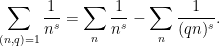
What confused me was that I worried, was there some double counting happening? This would be a problem.
The Proof
The proof that the equation above is correct is embarrassingly simple. Here is the key insight: Define 

and define 

The key insight is that these sets are the same: 


The equation is:
Now we can rewrite the right hand side:

This follows since either 


The Blind Spot?
Ken thinks I was fooled because one sum used n to index Term(n) while the other used n to index Term(qn). He thinks it is similar to the fallacy

in the formal-languages part of a theory course where squaring involves concatenation, or where L is a set of numbers and it’s just multiplication. His advice to students is to rewrite any set definition of the form

where 

This he says gives the reader an extra chance to realize in the case of 


In my Riemann case, the advice becomes to rewrite the compound use of the index 


Well here the 

Open Problems
Do you sometimes run into math statements like this? How often does this happen? Can we do a better job at explaining things?


Great post, but let me just comment that both examples (the chess move and the proof) also seem to be examples of a certain type of tunnel vision – you have a sort of tree of options and you search so far down one initial branch that in the end you forget to even start down the other branches and see if there is something that is already obviously better at the start. In the zeta function identity you posted the “other branch” is instead of evaluating immediately into series, to first divide both sides by (1-1/q^s) and then expand the 1/(1-1/q^s) on the lefthand side into a geometric series, after which the identity really is obvious.
Ok so you expand 1/(1-1/q^2) into sum from 1 to infinity n^(1/q^(s)) on the left side. What makes the identity obvious after that?
I’ve noticed that as the wine glass nears total emptiness, the proportion of obvious statements that become suddenly not obvious approaches one almost surely. The solution… more wine?
It is always nice to discover fallacies. They are opportunities to improve our understanding of the theory of fallacy. Nice read. Thanks.
It’s a simple exercise to show that for composite q, the (1-1/q) term needs to be transformed into a product of (1-1/p) over all prime factors p of q.
Sorry, but I don’t get it, i have
5/6 = (1-1/6) \neq (1-1/2)*(1-1/3) = (1/2)*(2/3) = 1/3
Right, the only reason this was worth mentioning is precisely because the two quantities *are* different. The original formula only holds when q is prime (as mentioned above). The generalisation to all integers is to multiply zeta by (1-1/p^s) for all prime factors p of q. For instance, when q = 6 and s = 3, you can verify numerically that the LHS gives about 1.0128 , while the RHS of the original formula would give about 1.1965. Applying my correction gives the right result.
If I’m doing a lock on a drive for multi-core safe access, I have a lock bit. When I want the lock, I spin with a LOCK BTS instruction while Yielding if it is not obtained. When done, I unlock with LOCK BTR.
I have heard of the bakery algorithm and I know the XCHG instruction can be used. I think there’s a CMPXCHG something like that. I’ve never need to look into these.
If I did not spin with Yield, I’d have to do like I do with going-to-sleep-until-message.