Win Five Hundred Or A Million Dollars, By Recursion?
The Erdős discrepancy problem and more

|
| source — in memoriam |
Raymond Redheffer was an American mathematician. He worked for his PhD under Norman Levinson, who was famous for his work on the Riemann Hypothesis. Redheffer spent his whole career at UCLA and was a great teacher—see this for more details. Redheffer wrote the mathematical content for the IBM-sponsored 50-foot poster “Men of Modern Mathematics,” which IBM last year released as a free I-Pad app.
Today Ken and I wish to talk about a problem that Gil Kalai spoke last month at Tech, and suggest an approach to solving the problem that draws on a matrix studied by Redheffer.
The Thousand Percent Solution
Boeing Dreamliner’s battery of problems
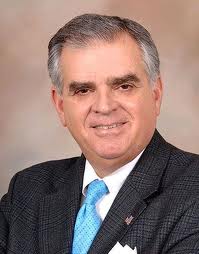
Ray LaHood was until recently the top FAA administrator, the head of the U.S. agency that oversees air safety for the United States. He said at a meeting of the U.S. Conference of Mayors:
“Those planes aren’t going to fly until we are 1,000% sure that they are safe to fly.”
Today I want to talk about percents, beliefs, tests, and predictions.
Happy St. Patrick’s Day—Again and Again and Again and Again
Leprechauns are tricky even when they’re not

Neil L. is a Leprechaun.
Today I wish to share my experience with him this morning of St. Patrick’s Day. Read more…
No-Go Theorems
How far does no-go go?

Simon Kochen is the Henry Burchard Fine Professor of Mathematics at Princeton University. He wrote a PhD thesis on ultrafilters at Princeton in 1959 under Alonzo Church, and supervised the thesis on bounded arithmetic and complexity theory by Sam Buss in 1985. He is also listed as faculty in Philosophy at Princeton, but may be best known for the impact of his work in physics. With the late Ernst Specker, he proved a theorem that implies quantum mechanics cannot be modeled by certain natural assumptions.
Today Ken and I want to discuss no-go theorems: results that show that one cannot prove something via a certain style argument.
Checking the Higgs Boson
Reliability and scientific discovery

|
| Cropped from src. |
Dennis Overbye is Deputy Science Editor of the New York Times. He has just written the lead article for Tuesday’s “Science” section of the Times, which is entirely devoted to the recent discovery of the Higgs Boson.
Today Ken and I want to talk about the large-scale human-reliability and software-reliability side of the equations.
Cryptography Is Dead?
Comments from a keynote panel

Whitfield “Whit” Diffie, Ron Rivest, Adi Shamir, and Dan Boneh are all famous cryptographers. They just gave a keynote panel at this year’s RSA Conference. Of course Rivest and Shamir are the ‘R’ and the ‘S’ in ‘RSA,’ while Diffie co-authored a famous 1976 paper long credited as introducing the key ideas in public-key cryptography. In fact many of those ideas had been developed and classified in Britain three years earlier. Moreover in 1874 William Jevons, whom we just posted about, remarked on function-inversion and factoring, writing
The work would probably occupy a good computer for many weeks…
Today I want to talk about the conference, and especially the comments from their panel.
Read more…
Who Invented Boolean Functions?
Hint: I am not sure

Calixto Badesa is a faculty member at the University of Barcelona. His department is called the Department of Logic, History, and Philosophy of Science. It is neat to see the idea of the “logic of science” added to the familiar ‘HPS’ acronym. Well, Badesa himself specializes in Logic—that is, the history of Logic as a discipline.
Today I want to discuss why propositional calculus as we now know it took so long to create. Read more…
Adding Dollar Signs
A few remarks on papers to appear at the 2013 Computational Complexity Conference
Chris Umans is the program chair of the upcoming Computational Complexity Conference, and has put together a terrific-looking program. He was aided by the rest of his program committee: Iftach Haitner, Troy Lee, Dana Moshkovitz, Jakob Nordström, Ryan O’Donnell, Ben Reichardt, Madhu Sudan, Amnon Ta-Shma, Jacobo Torán, and Emanuele Viola. We owe them for their hard work. Thanks.
Today I want to do something that we rarely do at GLL: report instantly on papers that have just been accepted at a conference.
The Informatics Prize
From a specialty in Complex Analysis

Rolf Nevanlinna was one of the top complex analysts of the last century, and is widely cited as the most famous Finnish mathematician of all time. Many might argue that his contributions go beyond country boundaries, placing him on the list of the greats from the last century.
Today I want to talk about him, his prize, and his work. Read more…
Polynomials Behaving Badly
Composite Moduli Ahead—Danger

Ken Jeong is a doctor of internal medicine, and a stand-up comic, and a TV and movie actor. His full name is Kendrick Kang-Joh Jeong, but he goes by “Dr. Ken.” His wife is also a doctor, but to date she has not tried show business. He got his break in the movies when the producers of the 2009 movie “Knocked Up” came to a comedy club looking to fill a short role of a maternity doctor at the end of the movie. They saw his performance and pegged him for the role even before learning he was a doctor in real life. In unreal life he’d had some TV appearances, including regular bit parts in the cable TV series, “Girls Behaving Badly.”
Today, getting away from thoughts of show business, I want to talk about polynomials over composite moduli and how they can behave badly. Read more…


