Global Warming?
It snowed in Atlanta, and we are closed, for the foreseeable future—where is global warming?

Atlanta is frozen. Here is what we looked like the other night.
Today I thought I might talk about the weather in Atlanta, and its connection to mathematical paradoxes. Read more…
Progress On The Jacobian Conjecture
More on the crypto approach to the Jacobian Conjecture

Arno van Essen is one of the world experts on the Jacobian conjecture (JC)—we have discussed his work before here. He has made many contributions to it, with my favorite being: To Believe Or Not To Believe: The Jacobian Conjecture. I like his attitude about conjectures: I think we should be more skeptical about our own. Oh well, few of my colleagues feel this way about 
Today I want to update a previous discussion on the JC, and prove a new theorem. Read more…
Zack’s Mom Knows
A puzzle with a story

Dick Karp needs no introduction. So I will give him none. Okay I will say that it has been an honor to know him for many years—we met right after I graduated from CMU, a pleasure to work with him on a few projects, and always fun to see.
Today I wish to talk about a recent dinner conversation I had with Dick and Noga Alon. Read more…
Anti-Social Networks
Applications of social networks to arbitrary graphs

Tim Roughgarden is a faculty member at Stanford, with interests in modern algorithms—my term. So his research is all about auctions, game theory, microeconomics, and social networks. You can see his visible hand here, from time to time. Read more…
Making Learning Less Shattering
COLT deadline is Fri. Feb. 7

|
|
Columbia University source. |
Vladimir Vapnik is one of the founding visionaries of Computational Learning Theory. His papers in 1963 with his advisor Aleksandr Lerner and in 1964 with Aleksey Chervonenkis are considered foundational for the Support Vector Machine model, which Vapnik himself ushered into its modern form in 1995 in joint work with Corinna Cortes. Vapnik and Chervonenkis got their initials into the theory walk of fame with the concept of VC-dimension in statistical classification. A 2008 interview with him titled “Learning Has Just Started” is still featured on the permanent page of the Computational Learning Theory (COLT) conferences and association.
Today Ken and I wish to note that my colleague Nina Balcan is chairing the COLT 2014 program committee, and talk about ways we might simplify learning—at least learning our field. Read more…
Bounds On Binomial Coefficents
A simple but useful bound on binomial coefficients
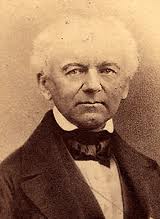
Andreas von Ettingshausen was a German mathematician and physicist who lived in the early part of the 19
Today I wish to share a simple inequality with you on binomial coefficients.
Read more…
Details Left To The Reader…
The buck stops here—on a blog, that is

Stasys Jukna has written a comprehensive book on Boolean circuit complexity, called Boolean Function Complexity: Advances and Frontiers. It includes a discussion of Mike Fischer’s Theorem on negations, which we recently re-gifted.
Today Ken and I would like to fill in some missing details to Mike’s famous result.
Read more…
A Shameless Plug
Our new book is finally out

|
|
Cropped from EuroGP’08 src. |
Ronan Nugent is our editor at the publisher Springer DE. He is a combination of an acquisitions editor—or commissioning editor in the British Isles—and a project editor. The former signs up the authors, and the latter sees the copy through from the manuscript to bound book
Today Ken and I want to thank him for helping get our latest book published.
Read more…
Predictions For The New Year
For 2014, that is

|
|
Cropped from Guardian article. |
Isaac Asimov was one of the most prolific writers of all times—he wrote or edited over 500 books. In his Foundation series a mathematician finds out that the future can be predicted based on equations.
Today Ken and I wish to make several predictions about the new year, without using any equations.
Read more…
The Winner Is…
Our selections for best results of the year
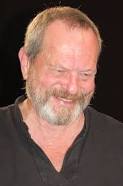
Terry Gilliam is the director of the movie The Zero Theorem. This science fiction film came out just this past year, 2013, but completes a dystopian trilogy with Gilliam’s amazing 1985 film Brazil and his 1995 film 12 Monkeys. The new film’s lead character, named Qohen Leth, is working on a formula to determine whether life holds meaning.
Today Ken and I want to announce the GLL winners for best results of 2013. No, Qohen Leth is not among the winners.


