Local Hams in La Jolla
A workshop on quantum computing at UCSD

|
| Cropped from workshop poster |
Dorit Aharonov, David Gosset, and Thomas Vidick did standup for three-and-a-half days in La Jolla earlier this year. They are not listed among the many distinguished actors who have performed at the La Jolla Playhouse on the UCSD campus. Nor were they observed by any of the Hollywood talent-search agencies in town, at least not that we know. But they were applauded by numerous computer science and physics students attending the the March 19–22 UCSD “Spring School on Quantum Computation” which they led.
Today we report on the meeting and discuss an important problem springing from condensed matter physics: the Local Hamiltonian (LH) problem.
Local Hams were proved to be “quantum 
The lectures seemed tailored toward physics students—but perhaps that is because our reporter who attended the workshop is a computer science PhD student. He is Chaowen Guan, being supervised by Ken at Buffalo. This is our introduction of Chaowen writing for the blog, and we turn to him for the main body of this post.
Putting Energy Into NP
Given a witness predicate for a language in 


![{[y,y]}](https://s0.wp.com/latex.php?latex=%7B%5By%2Cy%5D%7D&bg=ffffff&fg=000000&s=0&c=20201002)



Now suppose we have 





This makes
Note that when we just had one witness predicate the eigenvalue was 

Abstractly, this is just rehashing basic facts from linear algebra about eigenvalues and their corresponding eigenspaces. But we gain relevance to complexity, even though 


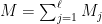

We can play the same game with unsatisfying assignments instead—then with 
Quantum NP
The class most regarded as the quantum analog of 


-
,
(Q accepts
)
;
-
,
.
Here 


Local Hamiltonians
The matrices 


Given: A set
of
-local Hamiltonian operators, each of operator norm at most
with entries specifiable by
bits, and real numbers
and
such that
.
Question: Is the minimum eigenvalue of the Hamiltonian
on
qubits smaller than
For any 
QMA-completeness
The following was originally proved for the constant value of 
The
-complete.
To prove it is in 
The proof for 





However, if the history of the computation is given in superposition, we can fight fire with fire by using entanglement to help local Hamiltonians verify the consistency. Consider the following superposition:
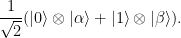
The resulting reduced density matrix of the first qubit will give us

Hence, this can facilitate the comparison between 

One can refer to the survey mentioned above for a detailed proof of this theorem. This paper gives a list of other known
To prove 

The Talks
Below is a list summarizing the talks over the meeting:
- Day 1: The talks covered the basic background on quantum mechanics and quantum computation, mainly including the physical principles of quantum computation, the quantum circuit model, some basic quantum algorithms such as factoring, and the introduction to LH problem.
-
Day 2:
-
Dorit presented the quantum version of Cook-Levin theorem, proving LH is
- Thomas spoke on delegating computation of encrypted quantum data to “quantum cloud”.
- David spoke on the adiabatic model of quantum computation.
-
Dorit presented the quantum version of Cook-Levin theorem, proving LH is
-
Day 3:
- Thomas discussed the topics on quantum multiplayer games.
- David spoke on the advantage of shallow quantum circuits over classical computers and topics on more restricted models of quantum computation.
- Dorit discussed the quantum PCP conjecture and the NLTS (standing for no low-energy trivial states) conjecture. See also this paper which came out just before the workshop.
-
Day 4:
- Thomas discussed more on the formulations of quantum PCP conjecture and the entangled-prover interactive proof systems.
- David gave an overview of stoquastic Hamiltonian problems.
After lunch there was a discussion of open equations and challenges. More details and materials of the talks can be found on this page.
Open Problems
Besides the main lecture format, there were sessions of open problems. Here are some of them:
-
Quantum unique games conjecture: The wonderful classical Unique Games Conjecture (UGC) has motivated and enabled many work on computational complexity since its advent. Is there a quantum version of UGC (related to
- Classical verifier in quantum interactive proof systems: It requires exponential resources (as we know) to simulate the quantum mechanical description in general. Hence, an interesting and important open question is whether an entirely classical system is able to verify the correctness of quantum evolutions or the “quantum-ness” of some given data. Some work on interactive proofs having classical verifier with only a few qubits have been done. (Updated 07/06/2018: Shortly after the workshop, this work made a major progress.)
- Fault-tolerant quantum computation with constant overhead: Currently there is a poly-logarithmic overhead. A paper by Daniel Gottesman showed the possibility of creating fault-tolerant quantum computation with constant error rate and constant overhead by using a family of low-density parity check (LDPC) codes. A recent paper motivated by Gottesman’s work claims that the family of quantum expander codes can meet the requirements (stated here), but this paper also mentions that additional analysis on syndrome errors needs to be done before these codes being employed in the construction in Gottesman’s paper. Hence, the construction of such a family of quantum LDPC codes still remains open.


I really enjoyed your post Chaowen!! I especially liked the example with 3CNF Boolean formulas in the section “Putting Energy Into NP”.
Is open problem #1 really Unique Games Conjecture? I thought that the quantum version was solved some time ago https://arxiv.org/abs/0710.0655. Maybe there was some confusion with quantum PCP conjecture, that is still open in the quantum case.
It’s also worth mentioning Open Problem #2 saw major progress on arXiv very shortly after the workshop ended: https://arxiv.org/abs/1804.01082. See also a great recorded talk by the author here: https://simons.berkeley.edu/talks/urmila-mahadev-06-15-18.
Thanks for the comment. The open problem is updated.
The third open problem is also solved in a follow-up to https://arxiv.org/abs/1711.08351 to appear at FOCS’2018 (but not yet available on arXiv). The property that was missing in the previous paper was a proof that the decoding algorithm still works well in case of a noisy syndrome.
Great post! A question: As NP (or rather its circuit analog) is often described in terms of non deterministic Boolean circuit, is there a simple such description for QMA (or a non-uniform analog) in terms of non deterministic quantum circuits?